
Previous
Next
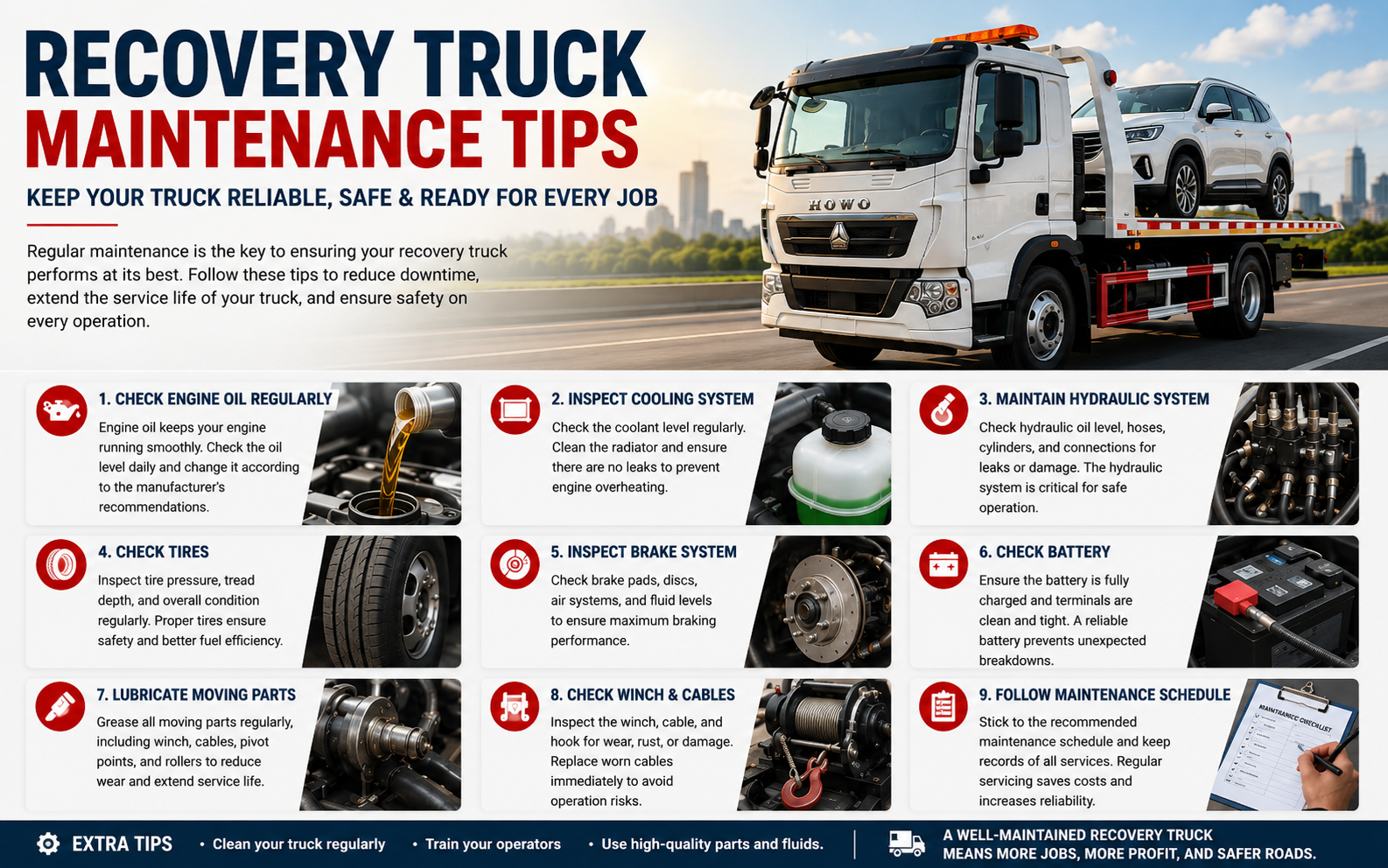
Recovery Truck Maintenance Tips
Description
Introduction
Recovery trucks play an essential role in roadside assistance, towing services, vehicle transportation, and emergency rescue operations. These trucks often work under demanding conditions, carrying heavy loads and operating for long hours.
Regular maintenance is critical to keeping your recovery truck reliable, safe, and efficient. Proper maintenance not only reduces unexpected breakdowns but also extends the lifespan of your truck and lowers operating costs.
In this article, we will share practical recovery truck maintenance tips to help you keep your vehicle in top condition.
1. Check Engine Oil Regularly
Engine oil is vital for smooth engine operation. It lubricates moving parts, reduces friction, and prevents overheating.
You should:
Check oil levels daily
Replace engine oil according to maintenance schedule
Use high-quality engine oil recommended by the manufacturer
Low or dirty engine oil can cause severe engine damage and expensive repairs.
2. Inspect the Hydraulic System
The hydraulic system is one of the most important parts of a recovery truck. It controls lifting, tilting, towing, and winching functions.
Regularly inspect:
Hydraulic oil level
Hydraulic hoses
Cylinders
Connections for leaks
Common hydraulic problems include:
Oil leakage
Low pressure
Slow lifting speed
Early inspection helps prevent major failures during operation.
3. Maintain the Cooling System
Recovery trucks often operate under heavy loads, which puts significant pressure on the engine cooling system.
Check regularly:
Coolant level
Radiator condition
Water pump
Cooling fan
An overheating engine can cause serious breakdowns and costly downtime.
Keeping the cooling system clean ensures better performance.
4. Check Tires Frequently
Tires directly affect driving safety, fuel efficiency, and vehicle stability.
Inspect:
Tire pressure
Tread wear
Sidewall damage
Wheel alignment
Underinflated or damaged tires increase fuel consumption and raise safety risks.
Proper tire maintenance improves overall truck performance.
5. Inspect Brake System
A recovery truck often carries heavy loads, making a reliable braking system essential.
Check:
Brake pads
Brake discs
Brake fluid
Air brake system
Warning signs include:
Unusual noises
Weak braking performance
Brake pedal issues
Brake problems should be addressed immediately.
6. Monitor Battery Condition
Battery problems are a common cause of vehicle failure.
Regular maintenance includes:
Checking battery voltage
Cleaning terminals
Ensuring secure cable connections
A healthy battery ensures reliable engine starting and electrical system performance.
7. Lubricate Moving Parts
Recovery trucks contain many moving mechanical parts.
These include:
Winch components
Pivot points
Hinges
Rollers
Lubricating these parts reduces wear and ensures smooth operation.
Neglecting lubrication can lead to increased friction and mechanical failure.
8. Inspect Winch and Cables
The winch system is critical for towing and recovery work.
Regularly inspect:
Winch motor
Steel cables
Hooks
Pulleys
Look for:
Fraying
Rust
Cracks
Cable wear
Damaged winch components create major safety risks.
Replace worn cables immediately.
9. Keep the Truck Clean
Dirt, mud, and road debris can accelerate wear and corrosion.
Regular cleaning helps protect:
Chassis
Flatbed
Hydraulic components
Electrical systems
This is especially important in areas with harsh weather or poor road conditions.
A clean truck also presents a more professional image to customers.
10. Follow a Maintenance Schedule
The best way to prevent unexpected failures is to follow a strict maintenance schedule.
A good maintenance plan includes:
Daily Checks
Oil
Tires
Lights
Hydraulic system
Weekly Checks
Battery
Brake system
Winch
Monthly Checks
Full inspection
Fluid replacement
Deep cleaning
Keeping maintenance records helps improve long-term reliability.
Final Thoughts
Recovery truck maintenance is essential for safety, efficiency, and long-term profitability.
By performing regular inspections and preventive maintenance, you can:
Reduce downtime
Lower repair costs
Improve safety
Extend truck lifespan
A well-maintained recovery truck means better performance, more business opportunities, and higher customer satisfaction.
Investing in maintenance today will save you time and money in the future.
 English
 Русский
 العربية