
19 Apr 2025
[2025 Guide] Compare 6 Tow Truck Types: Wheel Lifts, Flatbeds & More in One Must-Read!
Encountering vehicle breakdowns or accidents on the road is a predicament every car owner may face. Choosing the right type of towing service not only affects vehicle safety but also directly impacts repair costs and time. Whether it's a minor breakdown in the city or a serious accident on the highway, understanding the characteristics and applicable scenarios of different types of tow trucks is crucial.
What is a Tow Truck?
A tow truck is a vehicle specially designed for towing, recovering, and transporting other vehicles. Whether a vehicle needs to be moved due to a breakdown, an accident, or illegal parking, tow trucks provide the necessary solutions. Modern tow trucks are equipped with advanced hydraulic systems, powerful winches, and professional securing devices, enabling them to safely and effectively transport various types of vehicles, from small cars to large trucks and construction machinery.
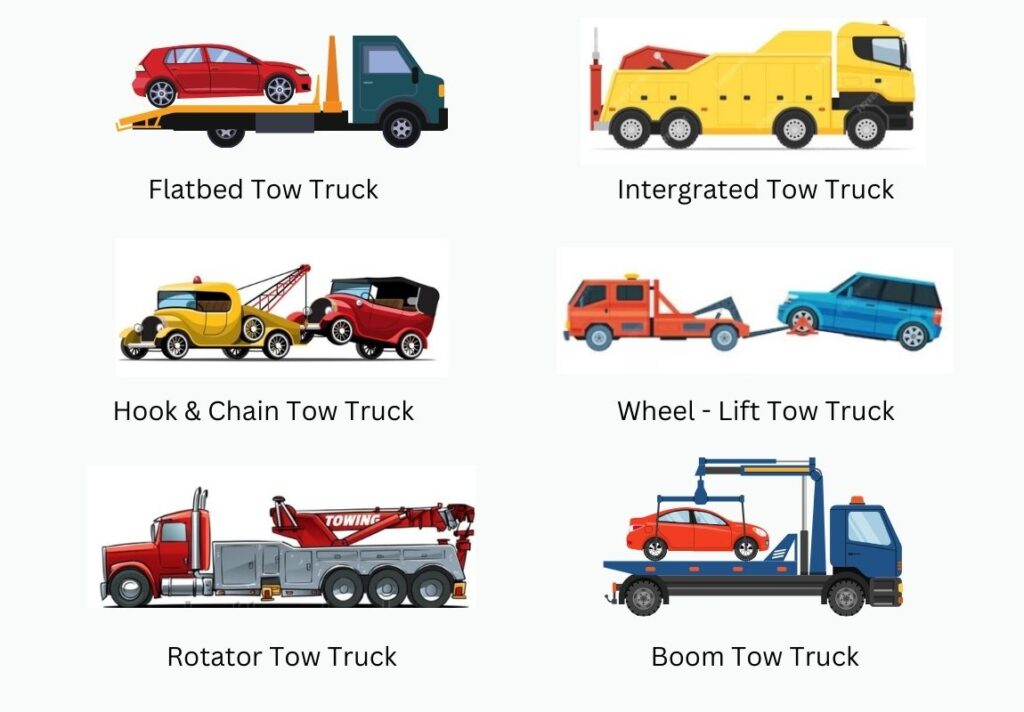
Types of Tow Trucks
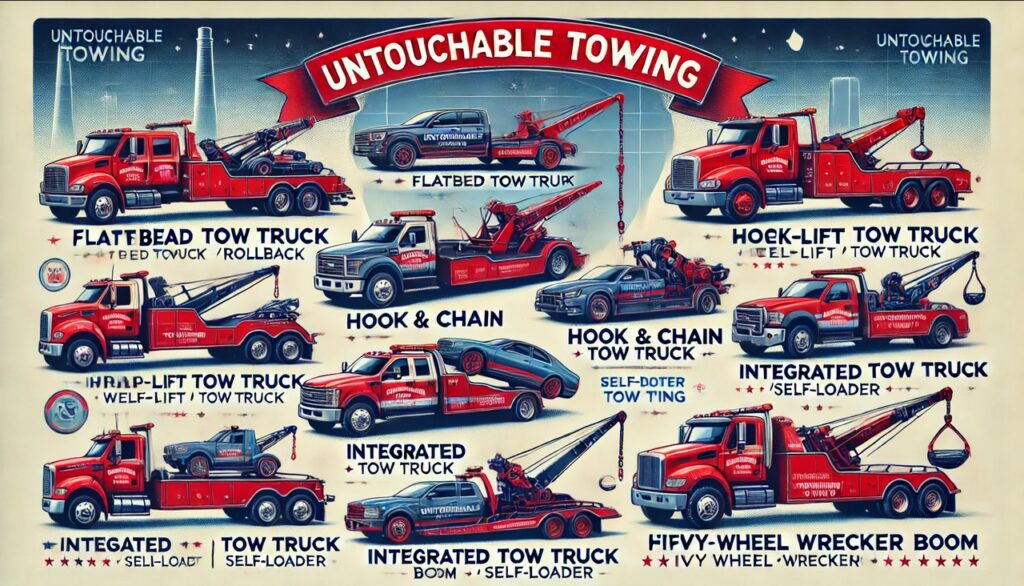
In the 2025 market, tow trucks are primarily categorized into six major types, each with unique design features and applicable scenarios:
1. Flatbed Tow Truck
Flatbed tow trucks feature a long, flat platform that can be tilted using a hydraulic system, allowing vehicles to be driven or pulled onto the platform.
Key Features:
Full vehicle carrying capacity, avoiding tire contact with the ground
Hydraulic tilting platform, typically up to 10-13 degrees angle
Powerful winch system for pulling vehicles that cannot drive onto the platform
Secure fastening systems to ensure vehicle stability during transport
Advantages:
Minimal damage to the towed vehicle
Suitable for long-distance transport
Appropriate for all-wheel drive and automatic transmission vehicles
Fewer speed restrictions during transport
Applicable Scenarios:
Transport of luxury vehicles and sensitive equipment
Safe transport of accident-damaged vehicles
Towing of all-wheel drive vehicles
Sports cars and low-clearance vehicles
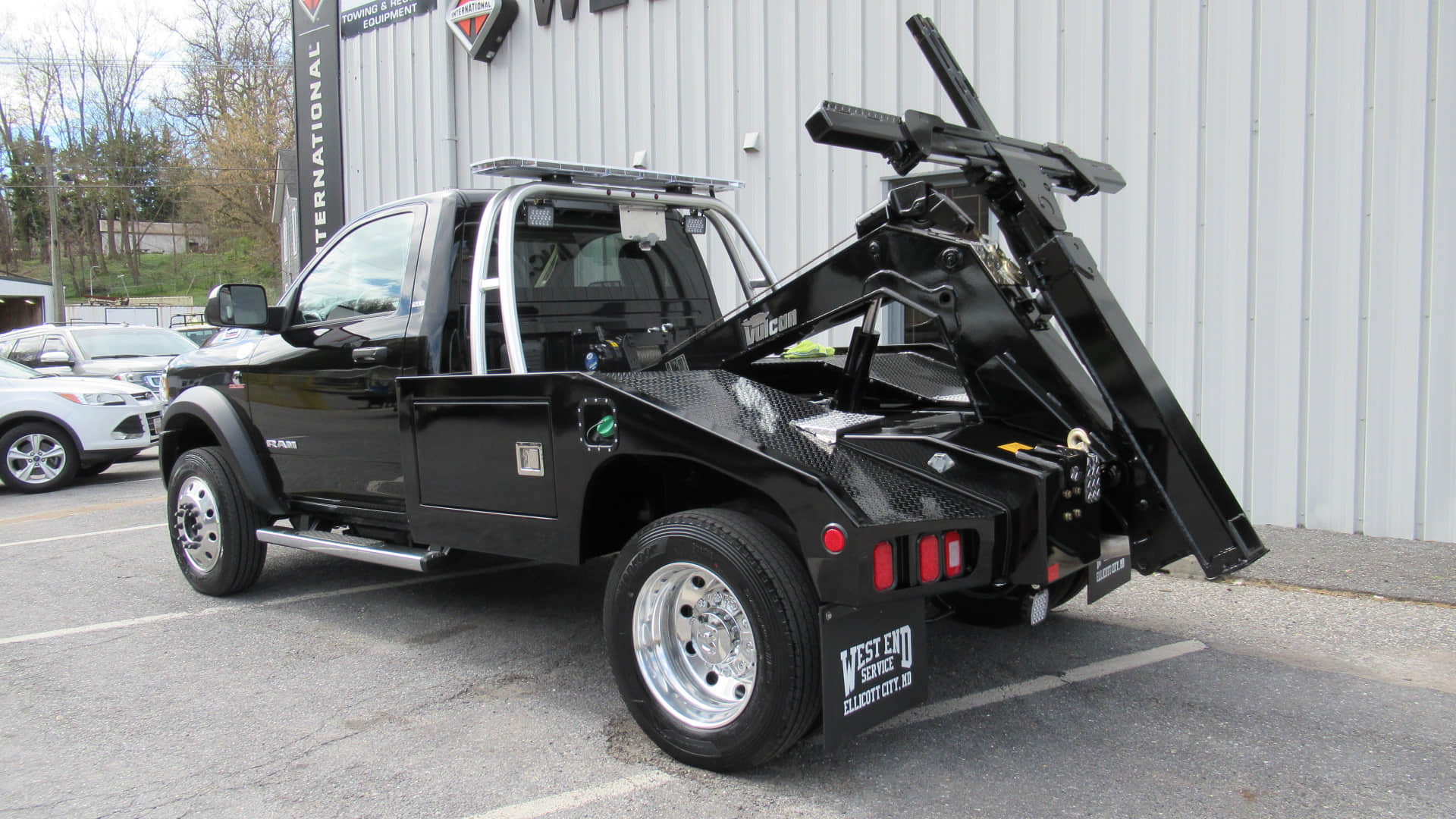
2. Wheel-Lift Tow Truck
Wheel-lift tow trucks use a metal device (called a "yoke") to secure the front or rear wheels of a vehicle, then lift them off the ground for towing.
Key Features:
Metal yoke system for securing wheels
Hydraulic lift system
More modern design than hook and chain tow trucks
Compact size, flexible operation
Advantages:
More economical than flatbed tow trucks
Suitable for operation in narrow spaces
Short setup time, high efficiency
Lower risk of damage to modern vehicles
Applicable Scenarios:
Short-distance towing within urban areas
Moving vehicles in tight spaces
Front-wheel or rear-wheel drive vehicles
Moving vehicles in parking lots and garages
3. Integrated Tow Truck
Integrated tow trucks combine boom and wheel-lift systems, making them versatile heavy-duty tow trucks.
Key Features:
Additional axles for extra stability
Integrated boom deeply embedded in the core structure
Powerful hydraulic system
Multi-functional operating capability
Advantages:
Extremely high towing and recovery capacity
Versatility for various tasks
Strong stability and safety
Capable of handling large, heavy vehicles
Applicable Scenarios:
Recovery of large trucks and buses
Transport of heavy machinery equipment
Recovery at complex accident scenes
Rescue operations in adverse weather conditions
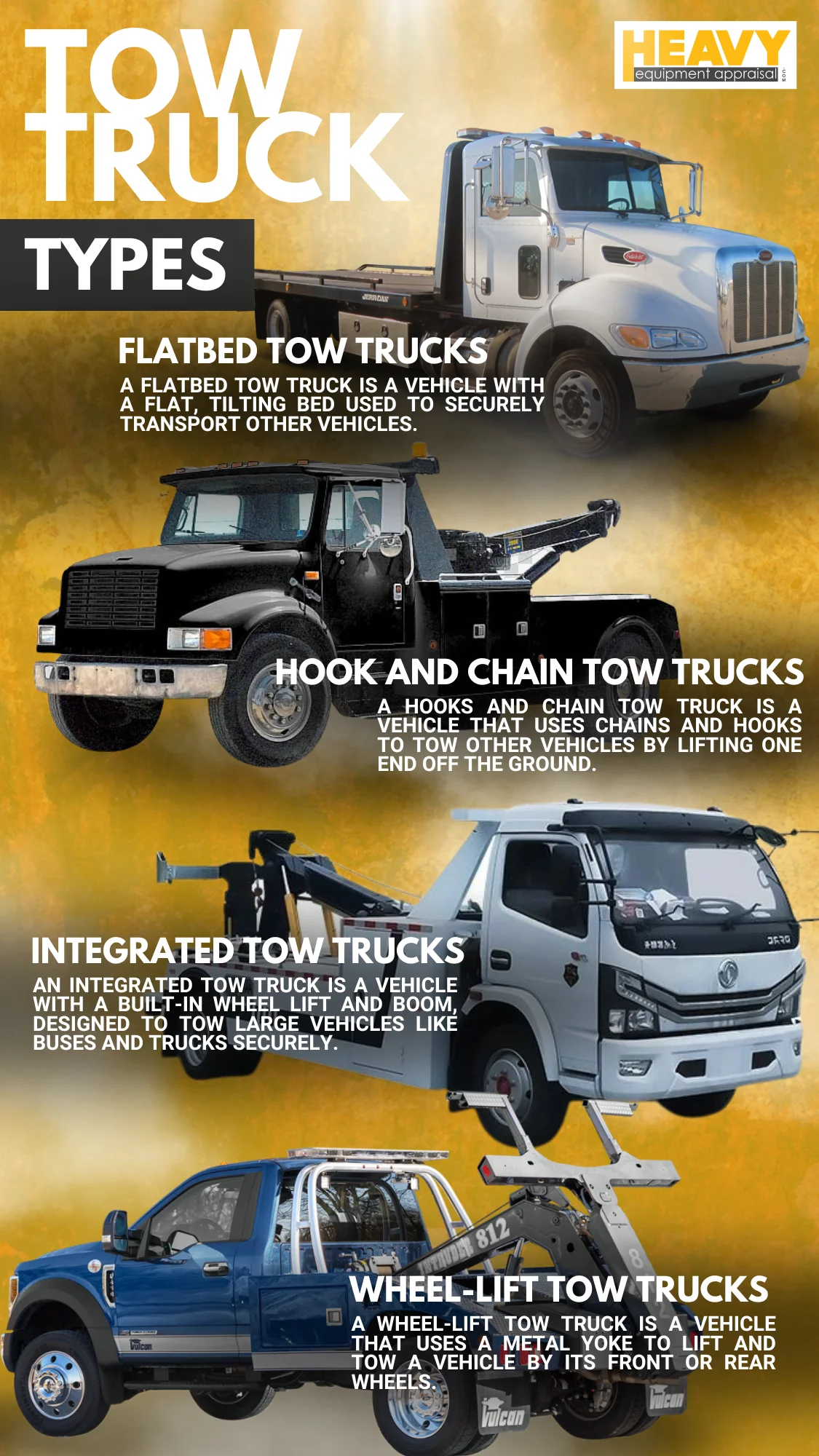
4. Rotator Tow Truck
Rotator tow trucks are among the most powerful types, equipped with a 360-degree rotating boom similar to a mobile crane.
Key Features:
Powerful arm that can rotate 360 degrees
Boom can extend to approximately 30 feet high
Extremely high lifting capacity (up to 120,000 pounds for some models)
Advanced stabilization systems and outriggers
Advantages:
Exceptional recovery and lifting capabilities
Precise position control
Ability to operate from various angles
Capable of handling extreme rescue situations
Applicable Scenarios:
Recovery of heavy vehicles in serious accidents
Rescue of overturned vehicles
Recovery operations in remote areas and complex terrain
Precise movement of large equipment requiring exact control
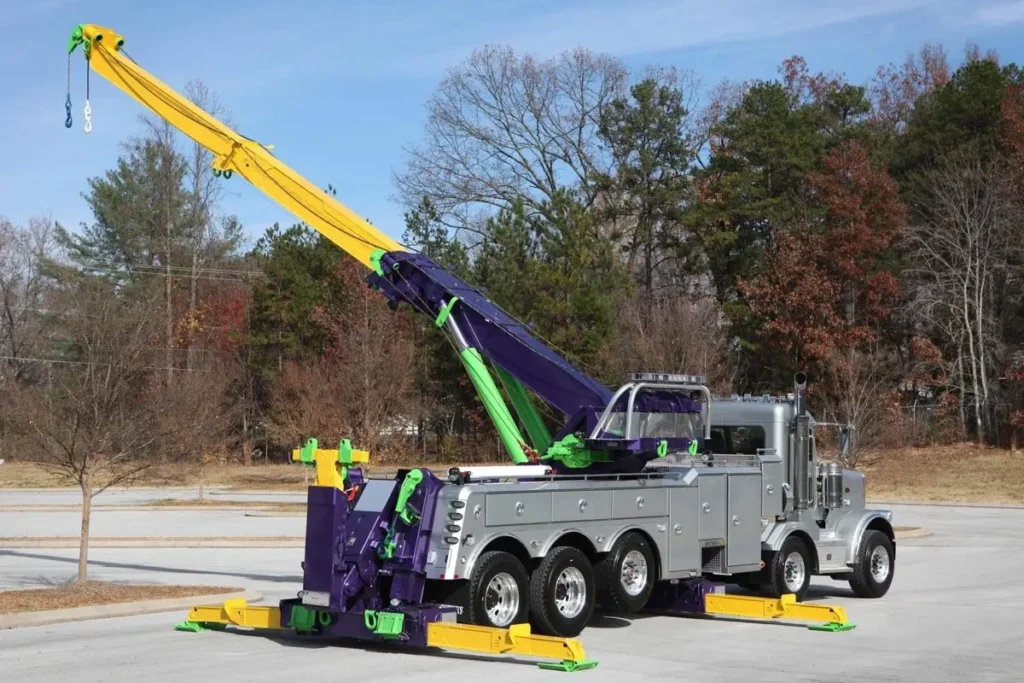
5. Hook and Chain Tow Truck
Hook and chain tow trucks are a more traditional type, using hooks and chains to secure a vehicle's axle or frame.
Key Features:
Simple hook and chain system
Basic lifting mechanism
Relatively straightforward operation
Lower equipment costs
Advantages:
Quick option for towing abandoned and scrapped vehicles
Simple setup, fast operation
Low maintenance costs
Suitable for short-distance transport
Disadvantages:
May cause damage to the body and suspension systems of modern vehicles
Not suitable for all-wheel drive vehicles
Lower stability compared to other types of tow trucks
Not appropriate for precision or high-value vehicles
Applicable Scenarios:
Towing abandoned and scrapped vehicles
Severely damaged vehicles that cannot be driven after accidents
Short-distance moving
Towing older model vehicles
6. Boom Tow Truck
Boom tow trucks use an adjustable hydraulic arm (boom) to recover vehicles from ditches or difficult positions.
Key Features:
Adjustable hydraulic boom
Powerful winch system
Multi-directional operational capability
Can be combined with other towing systems
Advantages:
Ability to recover vehicles from hard-to-reach positions
Flexible operational range
Applicable for various rescue situations
Complementary to other tow truck types
Applicable Scenarios:
Rescuing vehicles from ditches and roadsides
Recovering vehicles in difficult positions after accidents
Rescue operations requiring precise positioning
Vehicle recovery in complex terrain
In-Depth Analysis/Operational Steps
How to Choose the Appropriate Towing Service
Assess Your Vehicle Type
Consider the drive method (front-wheel, rear-wheel, or all-wheel drive)
Vehicle weight and dimensions
Vehicle ground clearance and special requirements
Consider the Nature of the Accident or Breakdown
Whether the vehicle can be operated in neutral
Extent and location of damage
Vehicle location (city streets, highways, remote areas)
Understand the Transport Distance
Short-distance towing (within 30 kilometers) may consider wheel-lift tow trucks
Long-distance towing should typically use flatbed tow trucks
Complex terrain or long distances may require specialized equipment
Special Considerations
Luxury cars or low-clearance vehicles should prioritize flatbed tow trucks
Heavy vehicles or large equipment require integrated or rotator tow trucks
Accident scene recovery may need specialized boom or rotator equipment
Safety Precautions for Towing Operations
Preparation Before Towing
Ensure the vehicle is in neutral (for manual transmissions)
Release the parking brake
Remove valuable items
Document existing vehicle damage
Properly Secure the Vehicle
Ensure all securing points are firmly connected
Check the tension of straps or chains
Confirm wheel locking devices are correctly installed
Test the stability of the securing system
Precautions During Transport
Avoid sudden braking and sharp turns
Maintain appropriate following distance
Regularly check securing devices
Be aware of vehicle height restrictions (especially at overpasses)
Additional Tips for Tow Truck Use
Obtain Insurance Information in Advance
Understand if your car insurance includes towing services
Save emergency contact numbers for your insurance company
Know the towing distance limitations covered by insurance
Find Professional Towing Services
Choose towing companies with proper certification
Understand fee standards and billing methods in advance
Review customer evaluations and service records
Confirm 24-hour service availability
Emergency Preparation
Keep emergency contact cards in your vehicle
Use mobile apps to store important information
Know the major towing companies in your area
Research service points along your route before long journeys
Methods to Reduce Costs
Consider joining a roadside assistance program
Compare prices from different towing companies
Ask if there are cash payment discounts
Avoid towing services at night and on holidays (when rates are higher)
Key Takeaways
Flatbed tow trucks are the most versatile and safest option for vehicles, especially suitable for valuable vehicles and long-distance transport.
Wheel-lift tow trucks provide economical and efficient solutions, suitable for short-distance towing within cities.
Integrated tow trucks and rotator tow trucks are ideal choices for heavy-duty and complex recovery operations.
Hook and chain tow trucks, though economical, may cause damage to modern vehicles and are mainly used for moving scrapped vehicles.
Boom tow trucks play an important role in vehicle recovery in difficult terrain and special positions.
When choosing towing services, consider vehicle type, nature of the breakdown, transport distance, and special requirements.
Safety is always the primary consideration in towing operations, including proper securing and careful transport.
Understanding insurance coverage in advance and finding professional services can save time and money in emergency situations.
With technological advancements, towing equipment in 2025 is safer, more efficient, and more professional than ever before. Understanding these different types of tow trucks and their applicable scenarios can help you make informed choices when facing vehicle breakdowns or accidents, ensuring your vehicle receives the most appropriate handling and protection.
 English
 Русский
 العربية